

ICOMOS Annual General Assembly 2025 in Lumbini, Nepal
The ICOMOS AGA2025 will take place in Lumbini, the Birthplace of Lord Buddha, World Heritage property, in Nepal. The formal events of the AGA2025 will take place between 11 October 2025 and 19 October 2025.
Lumbini, the Birthplace of Lord Buddha, was inscribed on the World Heritage List in 1997 under criteria (iii) and (vi). “Siddhartha Gautama, the Lord Buddha, was born in 623 B.C. in the famous gardens of Lumbini, which soon became a place of pilgrimage. Among the pilgrims was the Indian emperor Ashoka, who erected one of his commemorative pillars there. The site is now being developed as a Buddhist pilgrimage centre, where the archaeological remains associated with the birth of the Lord Buddha form a central feature”.
The Logo
 Lumbini was inscribed on the List of World Heritage as the birthplace of the Lord Buddha, “testified by the inscription on the Ashoka pillar”. The ICOMOS AGA2025 logo focuses on the stone pillar that was set up by Emperor Asoka during his pilgrimage to Lumbini in 249 BCE. The pillar is made of polished Chunar sandstone, and as per the late senior archaeologist Tara Nanda Mishra, it weighs 37 tons and stands at a height of 30 feet and 10.5 inches (9.41m), of which 13 feet and 8.5 inches (4.18m) is buried underground. The inscription on the pillar contains five lines and 90 letters in Brahmi script and Pali language. The inscription reads as follows:
King Piyadasi (Asoka), the beloved of the Gods, in the twentieth year of reign, himself made a royal visit. Sakyamuni Buddha was born here, therefore, the (birth spot) marker stone was worshipped, and a stone pillar was erected. The lord having been born here, the tax of the Lumbini village was reduced to the eighth part (only).
(Official translation: Lumbini Development Trust)
The word “Lumbinigama” (Lumbini Village) in Brahmi Script has been highlighted on the top right of the logo.
The Chinese traveller Xuanzang visited Lumbini in the seventh century CE, and he mentions the pillar erected by Asoka, that had a horse capital (which has been lost) and that an “evil naga’s [serpent] ferocious thunder-clap split the pillar in the middle down to the earth”. The depiction of the Asokan pillar shows the crack passing through the inscription, and a metallic belt that was fitted to stabilise the pillar.
Japanese Architect Kenzo Tange placed the Asokan pillar in the centre of the five-by-five-mile Master Plan of Lumbini that was prepared under the auspices of the United Nations in the 1970s. The main axis pointed north towards the foothills and high Himalayas. The visitors were to be guided by the Ashoka Pillar to the Sacred Garden and by the Himalayan Mountain range when departing. The mountains seen in the background are part of the Dhaulagiri Range, with the main peak rising to 8,167 metres, which is the seventh highest mountain in the world.
ICOMOS Scientific Symposium 2025
The theme “Disaster and Conflict Resilient Heritage- Preparedness, Response and Recovery” for the Triennial Scientific Plan (TSP) 2024-2027 was adopted in ICOMOS GA 2023 in Sydney and endorsed in ICOMOS AGA 2024 in Brazil . The TSP proposes actions for “Preparedness to Risk” in 2025. Preparedness to risk of disasters and conflicts begins with building of, and enhancing resilience of, for, and with heritage and the ICOMOS International Symposium 2025 will reflect this in the theme proposed.
Overarching Theme:
PERCEPTIONS OF HERITAGE AND RESILIENCE- Disaster Risk Reduction and Preparedness
Inspiration for the theme of Perceptions
Lumbini is one of the most sacred places in the world. Over many centuries people have developed visions of the place where Gautama Buddha was born. There are certain attributes and characteristics that are part of the common understanding of Lumbini. However, people have different perceptions, expectations and visions of Lumbini. They all are fragments of the overall picture of Lumbini. Bringing them all together provides a more comprehensive image of the sacred site.
The Buddhist scripture, the verses of the Udana 68-69 of the Khuddaka Nikaya, the exclamations of the Buddha, narrates the story of the Blind Men of Sravasti. Disciples asked Lord Buddha why the wandering hermits and scholars constantly argued about so many issues and never seemed to come to any consensus. Lord Buddha then related a tale about a king, who ordered for all the blind men in the ancient city of Sravasti to be gathered together in front of an elephant. Each was given a specific part of the elephant to touch. Each of them perceived a different aspect of the elephant and assumed the elephant to have only the features that they personally understood: the head is like a pot, the ear is like a winnowing basket, the tusk is like a share, the trunk is like a plough, the foot a pillar, the back a mortar, the tail a pestle and the tuft of the tail a brush. However, what they did not realize is that all these physical attributes put together make the elephant.
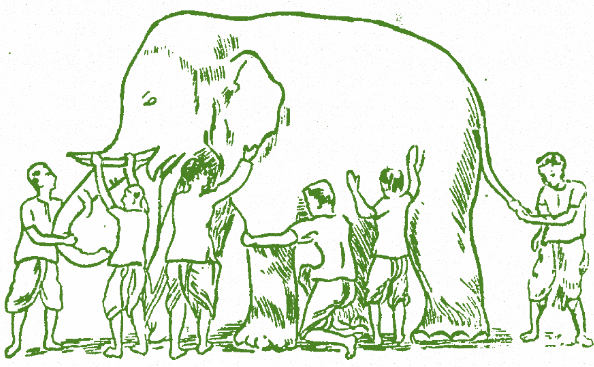
Then the Exalted One rendered this meaning by uttering this verse of uplift,
O how they cling and wrangle, some who claim
For preacher and monk the honoured name!
For, quarrelling, each to his view they cling.
Such folk see only one side of a thing.
(Udana, 68–69)
SUBTHEMES:
i. Navigating and negotiating Conflict
ii. Withstanding the forces of Nature
iii. Leveraging Heritage for Peace
ICOMOS Annual General Assembly 2025 |
|
DATE: 11th October till 19th October Statutory meetings
Annual General Assembly - 14 October 2025 60 Years ICOMOS Celebrations - 14 October 2025 Opening of Scientific Symposium - 15 October 2025 Scientific Symposium Closing of Scientific Symposium Site visit Events and meetings organized by ISCs
ORGANISER: ICOMOS Nepal VENUE: Lumbini Nepal |
ICOMOS International Scientific Symposium 2025 |
|
DATE: 16th - 17th October 2025 ORGANISER VENUE THEME Disaster Risk Reduction and Preparedness SUB THEMES: i. Navigating and negotiating Conflict ii. Withstanding the forces of Nature iii. Leveraging Heritage for Peace |
Pre and Post Event Tours |
To be announced soon! |